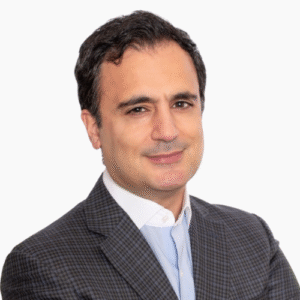
Tarek Samad
Senior Vice President & Global Head, Research Lundbeck
Senior Vice President and Global Head of Research at Lundbeck with over two decades of experience in academia and industry, leading small molecule and antibody biologic programs into the clinic. Prior to joining Lundbeck, Tarek was the chief scientific officer at Immunitas Therapeutics, and before that, Head of Multiple Sclerosis and Neuroimmunology Research at Sanofi, overseeing a portfolio spanning from early discovery to phase 2 clinical stage. Before joining Sanofi, Tarek was Head of Neurodegeneration Research, and Neuroinflammation Research at Pfizer. Tarek’s work in academic and pharmaceutical arenas has focused on studying adaptive and maladaptive inflammatory and neuroimmune interactions and their implications in numerous disease areas. Tarek received his Master’s and PhD degrees in molecular and cellular biology, from Louis Pasteur University in Strasbourg, France. He also holds a Master’s degree in Biotechnology and Genetic Engineering. During his tenure as faculty at Harvard, Tarek’s group investigated a number of novel molecular and cellular mechanisms related to key immune molecules. His work has appeared in prominent scientific journals such as Nature, Science, Neuron and Journal of Clinical Investigation. Tarek has given numerous national and international scientific lectures and presentations. He is the recipient of several awards including the Pfizer Investigator Program Award recognizing scientific leaders. He is also a member of several science foundations and societies and is a regular scientific reviewer for several journals.
Seminars
- Evaluating MG as a high-growth yet increasingly oversaturated market, recognising that multiple FcRn and C5 inhibitors show comparable aggregate efficacy but compete for a finite rare-disease population
- Identifying CIDP and MMN as commercially compelling but biologically underdefined opportunities, due to uncertainty around immunologic origin, incomplete real-world efficacy and unclear prevalence
- Balancing chronic suppression models against emerging immune-reset approaches, comparing repeated FcRn/complement administration with upstream B-cell or CAR-T interventions to inform long-term investment decisions focused on durable remission and defensible market positioning